
Have you ever paused in the middle of a busy day and wondered, “Is this really how I want to be living?”
Most of us move from one task to another — ticking boxes, meeting deadlines, keeping up with everything — yet somehow feeling like we’re not truly present in our own lives.
That quiet restlessness you feel? It’s often a sign that life is running on autopilot.
“Intentional living” is about gently taking back the steering wheel — making conscious choices instead of letting routines and noise decide for you. It’s not about perfection or grand plans; it’s about pausing, reflecting, and choosing what truly matters.
What is Intentional Living?
Intentional living is the practice of making conscious choices that reflect what truly matters to you. It means living with purpose — guided by your values, goals, and beliefs — rather than drifting through life on autopilot.
It’s not about chasing perfection or controlling every detail of your day. It’s about awareness — knowing why you do what you do, and choosing actions that bring you closer to the life you want to create.
In simple terms, intentional living is about aligning your everyday habits, thoughts, and decisions with the bigger picture of who you want to become.
Signs You’re Living on Autopilot
Have you ever reached your destination and realized you don’t remember half the drive? That’s what life on autopilot feels like — going through the motions without truly being present.
When days start blending into each other, it’s a sign that your actions might not be connected to your deeper intentions. Here are a few signs you might be living on autopilot:
- You often react instead of deciding. Do you follow routines or habits without asking if they still serve you?
- Your days feel repetitive and blurred together. You wake up, work, eat, sleep — but can’t remember moments that felt meaningful.
- You rarely pause to reflect on your choices. Decisions are made automatically, without checking if they align with your goals or values.
- You feel disconnected from your passions or purpose. You might achieve things but still feel a quiet sense of emptiness.
- You say “yes” too often or too quickly. Commitments happen out of habit, obligation, or fear of missing out, rather than conscious choice.
- Time slips away unnoticed. You look back and realize weeks or months have passed without meaningful progress toward what matters most.
If you nodded along with even a few of these points, it’s a signal: your life might be on autopilot. Recognizing it is the first step toward living with intention.
Why is Intentional Living Important?
Life can easily sweep us along, moving from one task to the next without a pause for reflection. Without conscious choice, weeks and months can pass in a blur, leaving us feeling disconnected from our own lives.
Intentional living gives you the ability to pause and align your actions with your values and priorities. It allows you to focus on what truly matters, turning ordinary moments into meaningful experiences. Instead of drifting through your days, you start making decisions that reflect who you are and the life you want to create.
Even small, deliberate choices can gradually shape your journey, helping you feel more present, fulfilled, and connected to the things that bring purpose and joy. It’s about living with awareness, not perfection — creating a life that feels authentic and genuinely yours.
The Core Principles of Intentional Living
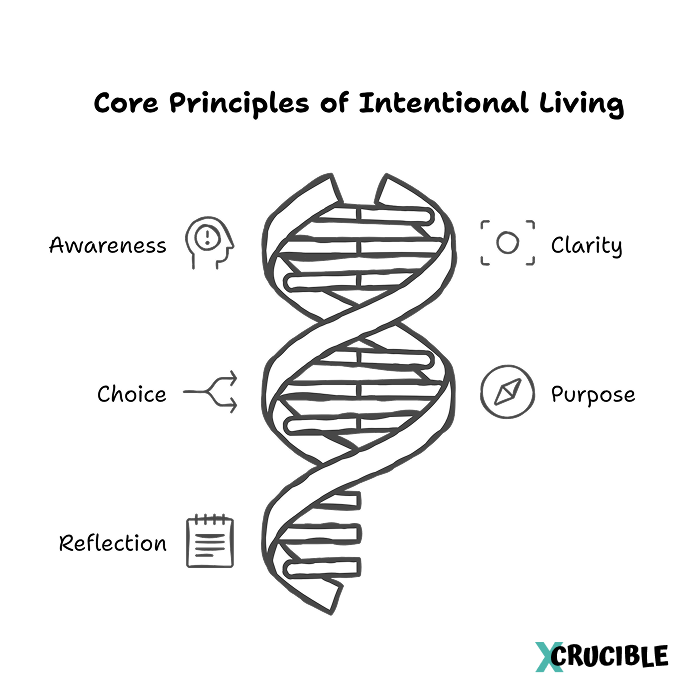
1. Awareness: At its heart, intentional living begins with awareness — noticing your thoughts, actions, and surroundings. Awareness helps you recognize patterns, habits, and routines, giving insight into how your life is currently unfolding.
2. Clarity: Clarity involves understanding your values, priorities, and what truly matters to you. When you have clarity, it becomes easier to distinguish between what is essential and what is simply noise.
3. Choice: Life is full of decisions, both big and small. The principle of choice reminds us that we are not passive observers; we have the power to make decisions that align with our deeper intentions.
4. Purpose: Purpose is the guiding thread that gives direction to your actions. It connects daily moments to a larger sense of meaning, ensuring that your life feels coherent and significant.
5. Reflection: Reflection allows us to pause and consider our experiences, thoughts, and feelings. It provides perspective and insight, helping us understand whether our lives are aligned with our principles and values.
These principles form the backbone of intentional living, offering a lens through which we can see our lives more clearly and understand what truly shapes our experiences.
The Psychology of Intentional Living
Intentional living is deeply connected to how the brain processes habits, choices, and meaning. The mind naturally relies on routines and automatic behaviors to conserve energy, which is why people often drift through life without noticing their actions.
Living intentionally engages the part of the brain responsible for planning, decision-making, and aligning actions with long-term goals. When actions align with personal values and purpose, the brain experiences a sense of reward and satisfaction, which increases motivation and a feeling of fulfillment.
Awareness of cognitive biases, such as inertia, fear of change, and social pressure, helps prevent automatic behaviors from taking over. By bringing conscious attention to choices, intentional living allows the mind to act deliberately rather than reactively, creating clarity, focus, and a stronger sense of control over one’s life.
Benefits of Intentional Living
- You reclaim control over your life: Instead of drifting through routines, you actively decide where your time and energy go.
- Your decisions align with your values: Choices feel purposeful, reducing regret and creating a stronger sense of direction.
- Your mind becomes calmer: Awareness and reflection reduce mental clutter, anxiety, and the stress of constant busyness.
- Everyday moments feel more meaningful: Even small actions, like having a meal or a conversation, become opportunities for presence and connection.
- You build stronger, more authentic relationships: Being deliberate in your interactions fosters trust, empathy, and deeper bonds.
- You notice progress toward your goals: Focused effort on what matters most helps you see tangible results, boosting motivation.
- You become more adaptable and resilient: Knowing your priorities makes it easier to navigate challenges without losing sight of what matters.
- Your overall sense of fulfillment grows: Life feels richer and more satisfying because your actions reflect who you truly are.
How to Start Living Intentionally: 11 Tips
Identify Your Core Values
Start by figuring out what truly matters to you. Your values are the lens through which all decisions should be viewed. Write down 3–5 values that feel essential — like honesty, growth, creativity, or connection. Next time you face a choice, ask yourself: “Does this align with my values?” This simple check can guide even small daily decisions toward a more meaningful life.
Clarify Your Goals
Once you know your values, define clear goals that reflect them. Break them into short-term and long-term targets. For instance, if health is a top value, a goal might be walking 30 minutes daily or cooking healthy meals thrice a week. Goals give your life direction, turning intentions into actionable steps.
Track Your Time
Awareness starts with knowing where your time goes. Keep a log for a week, noting how much time you spend on work, social media, chores, or leisure. Patterns often reveal areas where autopilot behavior dominates. Seeing it on paper helps you consciously decide what to keep, adjust, or eliminate.
Prioritize What Truly Matters
Intentional living requires distinguishing between urgent and important. Ask yourself: “Does this activity move me closer to my goals or reflect my values?” Focus on what contributes to growth and fulfillment, and learn to let go of tasks that simply fill time.
Practice Mindfulness Daily
Being present helps you notice choices that might otherwise pass unnoticed. Try simple practices: take 5 deep breaths before starting a task, journal for 10 minutes, or pause during meals to savor taste and texture. Mindfulness reduces stress, increases focus, and strengthens your connection to each moment.
Set Boundaries Without Guilt
Boundaries protect your time and energy. Saying no to extra work, constant notifications, or social pressures isn’t selfish — it’s a form of self-respect. For example, create a “no-screen hour” each evening to recharge or politely decline commitments that don’t align with your priorities.
Design Intentional Routines
Your daily habits can support or sabotage your intentions. Morning routines like planning your day, meditating, or a short workout set a purposeful tone. Evening reflections, like reviewing achievements and lessons learned, help close the day consciously. Consistency creates momentum.
Reflect and Reassess Regularly
Reflection allows you to adjust your course without guilt. Ask questions like: “Did I spend my time in ways that mattered today?” or “Which decisions felt aligned with my values?” This practice builds self-awareness and keeps your life evolving intentionally rather than by habit.
Celebrate Progress, Not Perfection
Recognize even small steps. Completing a challenging task, saying no when needed, or practicing patience counts. Celebrating these wins reinforces intentional habits and motivates continued conscious living, showing that every effort toward alignment matters.
Stay Flexible and Adaptable
Intentional living isn’t rigid. Life throws curveballs, and priorities shift. Adjust your plans when necessary without feeling guilty. Flexibility allows you to maintain your values and purpose even when circumstances change.
Surround Yourself with Positive Influences
Your environment shapes your habits. Spend time with people who inspire and support your growth, and limit exposure to negativity or distractions. Curate your media, workspace, and social circles to reinforce the intentional life you want to create.
Common Barriers and Mindset Blocks
Even with the best intentions, living intentionally can be challenging. Certain habits, fears, and external pressures often hold us back from making conscious choices.
1. Habitual Autopilot: Most of our days are guided by routines. While habits save energy, they can keep us stuck in automatic behaviors that no longer serve us. Pausing regularly to reflect on your choices and asking whether your routines align with your values can help break this cycle.
2. Fear of Change: Change can feel uncomfortable or risky, even when the current path isn’t fulfilling. Starting with small, manageable steps and celebrating each bit of progress makes it easier to embrace new ways of living.
3. Overwhelm and Lack of Focus: Endless tasks and constant distractions can leave you feeling paralyzed. Focusing on what truly matters, setting clear priorities, and protecting your time can restore clarity and control.
4. Social Pressure and Expectations: Family, friends, and societal norms can influence your choices, sometimes pulling you away from what’s meaningful. Being clear about your values and gently asserting boundaries helps you stay aligned with your own path.
5. Perfectionism: Waiting for the “perfect moment” or trying to do everything flawlessly can stop you from taking action. Accepting that progress, not perfection, is enough encourages consistent, intentional steps.
6. Limited Self-Awareness: Without knowing your own priorities, habits, and triggers, it’s easy to drift back into autopilot. Regular reflection, journaling, and checking in with yourself strengthen self-awareness and guide better choices.
Real-Life Example
Think about a typical week in your life. You wake up, follow your routine, check notifications, work, and go to bed — and suddenly the days blend together. You realize that most of your time is spent reacting to tasks rather than creating the life you want.
Now, imagine taking a moment to pause and ask yourself what really matters. You notice small changes: dedicating a few minutes each day to a hobby, planning time for meaningful conversations, or simply being present during daily activities. Over time, these small choices start to reshape your days.
You begin to feel more connected to your goals and values. Simple moments — like a walk outside, cooking a meal mindfully, or finishing a small project — start to feel rewarding. Your sense of control grows, and even busy days feel purposeful rather than chaotic.
This example shows that living intentionally doesn’t require massive life changes. It’s about noticing your patterns, making conscious choices, and letting small, consistent actions gradually transform how you experience everyday life.
Common Misconceptions About Intentional Living
Many people hesitate to embrace intentional living because of misconceptions about what it actually involves. Clarifying these myths can help you approach it realistically and confidently.
It means being perfect all the time: Intentional living isn’t about flawless routines or never making mistakes. It’s about conscious choices, progress, and aligning actions with your values, not perfection.
It requires drastic life changes: You don’t need to quit your job, move to a new city, or overhaul your entire lifestyle. Even small, consistent changes — like setting priorities or pausing before decisions — can have a big impact.
It’s time-consuming: Living intentionally can actually save time. By focusing on what truly matters, you eliminate unnecessary tasks, distractions, and stress, creating more room for meaningful activities.
You must have it all figured out: You don’t need a perfect plan or a fully defined purpose to start. Intentional living is a process of awareness, reflection, and gradual alignment, not a one-time achievement.
Wrapping Up
Intentional living is not about perfection, rigid routines, or having all the answers. It’s about pausing, noticing, and making conscious choices that reflect what truly matters to you. Each small decision — whether it’s how you spend your time, who you spend it with, or how you respond to challenges — becomes a building block for a life filled with purpose and fulfillment.
Living intentionally transforms ordinary moments into meaningful experiences. It helps you step out of autopilot, understand your priorities, and create daily habits that align with your values. Over time, these mindful choices weave together to form a life that feels authentic, balanced, and deeply satisfying.
Start today — notice your patterns, reflect on your intentions, and take deliberate action. With patience and awareness, you can create a life that feels not just lived, but truly meaningful.