
You’re stuck in traffic, a coworker snaps at you, or a loved one frustrates you—again. You feel that familiar tension rising: your heart races, your thoughts spiral, and you just want to react.
Now pause.
What if there were a way to respond differently—calmly, wisely, and without letting frustration take over? That’s the power we’ll explore in this guide. Emotional patience isn’t just about waiting; it’s about handling life’s moments with inner balance.
Ready to see how it can change the way you respond to life’s challenges? Let’s dive in.
What Is Emotional Patience?
Emotional patience is the ability to remain calm and composed when your emotions are triggered. It’s not just about waiting your turn or enduring delays—it’s about how you respond to frustration, anger, disappointment, or stress without overreacting.
It involves noticing your emotional reactions, taking a moment to pause, and choosing a response that aligns with your values rather than acting on impulse. Whether it’s calming yourself after a stressful email, handling criticism gracefully, or staying steady in a tense conversation, emotional patience allows you to act thoughtfully instead of reacting automatically.
By developing this skill, you gain greater control over your emotions, reduce stress, and foster healthier relationships—both with yourself and with others.
Patience vs Emotional Patience: Key Differences
Patience usually means waiting calmly when things don’t go as planned—like a long line or a delayed project. It deals with external situations.
Emotional patience, however, is about how you handle your feelings in challenging moments. It’s the ability to pause, stay composed, and respond thoughtfully instead of reacting impulsively.
In essence:
- Patience: Endures situations.
- Emotional Patience: Manages emotions.
Importance of Emotional Patience
Emotional patience plays a crucial role in how we experience and respond to life’s challenges. It allows you to pause and assess situations before reacting, which can prevent unnecessary conflict and regret.
This skill is particularly important because emotions often arise unexpectedly and intensely. Without patience, even small frustrations can escalate into stress, poor decisions, or damaged relationships. Emotional patience gives you the ability to maintain composure and clarity, even when situations are difficult or unpredictable.
It’s a foundation for emotional resilience, self-control, and thoughtful living—helping you navigate daily life with a sense of calm and intentionality and preventing emotional debt.
Benefits of Developing Emotional Patience
When you strengthen emotional patience, it touches every area of life, from your decisions to your relationships. Here’s how it can make a difference:

Stay Calm in Tough Moments
Emotional patience helps you handle frustration, anger, or disappointment without overreacting. Instead of being swept away by emotions, you can pause, breathe, and respond with clarity.
Build Stronger Connections
When you respond with understanding rather than irritation, you nurture trust and empathy in your relationships. Whether at home, with friends, or at work, emotional patience helps conversations stay constructive instead of tense.
Make Better Decisions
Patience gives you space to think before acting. By taking a moment to reflect, you make choices based on reason, not impulse, leading to smarter and more satisfying outcomes.
Reduce Stress and Overwhelm
Life can be unpredictable, and emotional triggers are everywhere. Practicing patience helps you stay grounded, lowering anxiety and giving you a sense of calm even in challenging situations.
Strengthen Resilience
Emotional patience is like a shield—it helps you bounce back from setbacks and navigate challenges without losing balance. Over time, it builds mental and emotional stamina.
Grow as a Person
Observing your reactions and learning to respond thoughtfully encourages self-awareness and reflection. Emotional patience isn’t just about staying calm—it’s about understanding yourself and growing through each experience.
Live More Mindfully
With patience, you notice the present moment instead of rushing through it. You become more aware of your feelings, surroundings, and choices, which makes life richer and more intentional.
In short, emotional patience empowers you to respond rather than react, to connect rather than clash, and to live a life that feels balanced, meaningful, and under your control.
How to Build Emotional Patience?
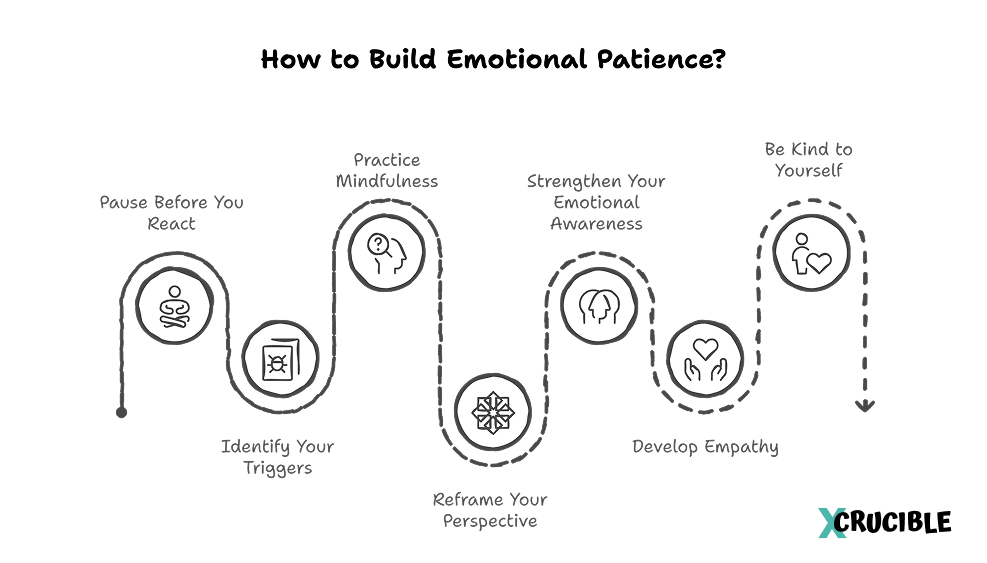
Building emotional patience is a gradual process—it’s not about suppressing your emotions but learning how to handle them with understanding and calm. Here are a few practical ways to start strengthening it:
1. Pause Before You React
When emotions rise, your first instinct might be to respond immediately. Instead, take a brief pause. A few deep breaths can give your mind the space it needs to process the situation clearly.
2. Identify Your Triggers
Notice the situations or people that easily frustrate or overwhelm you. Once you recognize these triggers, you can prepare for them mentally and approach them with awareness rather than impulse.
3. Practice Mindfulness
Mindfulness helps you stay present instead of being carried away by emotions. Simple practices like meditation, journaling, or even mindful breathing can train your brain to stay calm and focused when emotions run high.
4. Reframe Your Perspective
Instead of viewing challenges as threats, see them as opportunities to practice patience. Remind yourself that not every reaction deserves your energy, and sometimes silence or stillness is the wisest response.
5. Strengthen Your Emotional Awareness
Pay attention to how emotions feel in your body—tight shoulders, a faster heartbeat, or shallow breathing. The more you understand these signals, the easier it becomes to pause and manage them before they take over.
6. Develop Empathy
Try to see situations from another person’s point of view. Empathy softens your reactions and makes patience easier because you begin to understand rather than judge.
7. Be Kind to Yourself
You won’t always get it right—and that’s okay. Building emotional patience takes time and practice. Celebrate small improvements and remember that progress, not perfection, is what truly matters.
Common Obstacles That Erode Emotional Patience
Even when we try to stay calm and composed, certain habits, situations, or thought patterns can quietly wear down our emotional patience. Recognizing these obstacles is the first step toward managing them better.
1. Constant Stress and Overwhelm
When your schedule feels packed and your mind overloaded, your tolerance naturally drops. Even small inconveniences start to feel heavy.
How to overcome: Take regular breaks, simplify your to-do list, and set aside moments for rest. Breathing exercises or short mindfulness sessions can quickly reset your emotional balance.
2. Unmanaged Expectations
We often lose patience when things don’t go according to plan—whether it’s delays, misunderstandings, or unmet goals.
How to overcome: Practice flexibility. Remind yourself that not everything is in your control and that growth often comes through detours. Replace “should have” with “it’s okay if it takes time.”
3. Lack of Self-Awareness
When you don’t notice emotions building up, they can suddenly burst out in anger or frustration.
How to overcome: Check in with yourself regularly. Notice physical signs—like a tight chest or clenched jaw—that signal rising tension. Journaling or reflecting at the end of the day helps you spot emotional patterns early.
4. Negative Thought Loops
Replaying upsetting moments or imagining worst-case scenarios keeps frustration alive.
How to overcome: When you catch yourself ruminating, shift your focus. Ask, “Is this thought helping me or hurting me?” Replace overthinking with a grounding activity like a walk, music, or talking to someone you trust. Practicing emotional minimalism can also help.
5. Burnout or Fatigue
Exhaustion can make even small problems feel unmanageable.
How to overcome: Prioritize rest before your body forces you to. Good sleep, balanced meals, and small daily rituals—like reading, meditating, or time outdoors—can recharge your emotional energy.
6. Impulsive Communication
Reacting too quickly can escalate conflicts and damage relationships.
How to overcome: Pause before replying—especially to messages or conversations that trigger you. If needed, step away and return once your emotions settle. Calm words always hold more weight than rushed ones.
Real-Life Example
Let’s take a simple, everyday example.
Imagine you’ve had a long day at work. You come home tired, and someone makes a careless comment that annoys you. Instinctively, you feel anger rise—you want to snap back. But instead, you pause. You take a breath, remind yourself that they might be tired too, and choose to respond calmly or say nothing at all.
That moment of restraint is emotional patience in action. It doesn’t mean you’re suppressing your feelings—it means you’re giving yourself space to understand them before reacting. Over time, this small shift in response can change how you communicate, how you handle stress, and how others perceive you.
It’s not about never feeling upset; it’s about learning to stay steady even when emotions run high. That’s the quiet strength emotional patience brings into your life.
Wrapping Up
Emotional patience is one of those quiet strengths that doesn’t always get noticed—but it changes everything. It helps you stay calm when life gets noisy, think clearly when emotions run high, and respond with grace when situations test your limits.
It’s not something you master overnight. It grows each time you pause before reacting, choose understanding over anger, or show compassion when it’s hardest to. These small, intentional moments build emotional resilience that lasts.
As you start practicing emotional patience, you’ll notice subtle shifts—conversations feel easier, stress feels lighter, and challenges no longer control your peace of mind.
Take it one moment at a time. Breathe, observe, and remind yourself: calm is your strength, not your weakness.